Gemini 4 Argon API Pricing: 8 Providers Compared, Dec 1 Hike & Task Costs
Compare Gemini 4 Argon API pricing across eight providers, including Google’s Dec 1 rate doubling, 95% implicit caching, thinking tokens, and task costs.
Gemini 4 Argon is Google’s first Gemini 4 reasoning model, announced on September 30, 2026 and made generally available on October 13, 2026. It is built for heavy multi-step work rather than lightweight chat: large-scale codebase refactors, legal and financial document reconciliation, and cross-modal analysis across documents, charts, and long video. Under Google’s Gemini 4 Argon specification, the model natively accepts text, images, video, audio, and PDF inputs, returns text, and runs inside a unified 1,048,576-token context window shared by input, thinking, and output. Standard synchronous responses cap at 65,536 tokens, while long-decode continuation scales up to 1,048,576 output tokens. Through Google’s introductory window ending November 30, 2026, Google’s real-time Standard API charges $2.00 per million input tokens and $10.00 per million output tokens (including thinking), doubling to $4.00 and $20.00 on December 1, 2026. BeatAPI currently bills the same model in real time at $1.00 per million input tokens and $5.00 per million output tokens.
Quick answer
BeatAPI has the lowest real-time effective price for Gemini 4 Argon across all eight providers: BeatAPI bills $1.00 per million uncached input tokens, $0.05 for implicit cache reads, and $5.00 for output (including thinking) with no platform fee. Google Gemini API, Google Cloud Vertex AI global endpoints, and Vercel AI Gateway all list $2.00 / $0.10 / $10.00 during Google’s introductory period. Cloudflare AI Gateway (Unified Billing), Requesty, and OpenRouter add 5%–5.5% in platform or credit fees (~$2.10–$2.11 / $10.50–$10.55 effective), while WaveSpeedAI already lists the full $4.00 / $0.20 / $20.00 standard rate.
Google’s official Gemini 4 Argon rates double on December 1, 2026: After November 30, 2026, Google Gemini API, Vertex AI, and pass-through aggregators move to $4.00 input, $0.20 cached input, and $20.00 output per million tokens. BeatAPI’s $1.00 / $0.05 / $5.00 pricing is also an introductory rate, but its end date is not tied to Google’s December 1 schedule.
Gemini 4 Argon has flat pricing across its entire 1M unified context window, so bills hinge on implicit caching and thinking tokens: There is no 200K or 272K long-context price jump and no explicit cache write or storage fee; shared prefixes of at least 4,096 tokens automatically qualify for a 95% implicit cache discount. All internal thinking tokens bill at the full output rate and are governed by thinking_level (low, medium, or high).
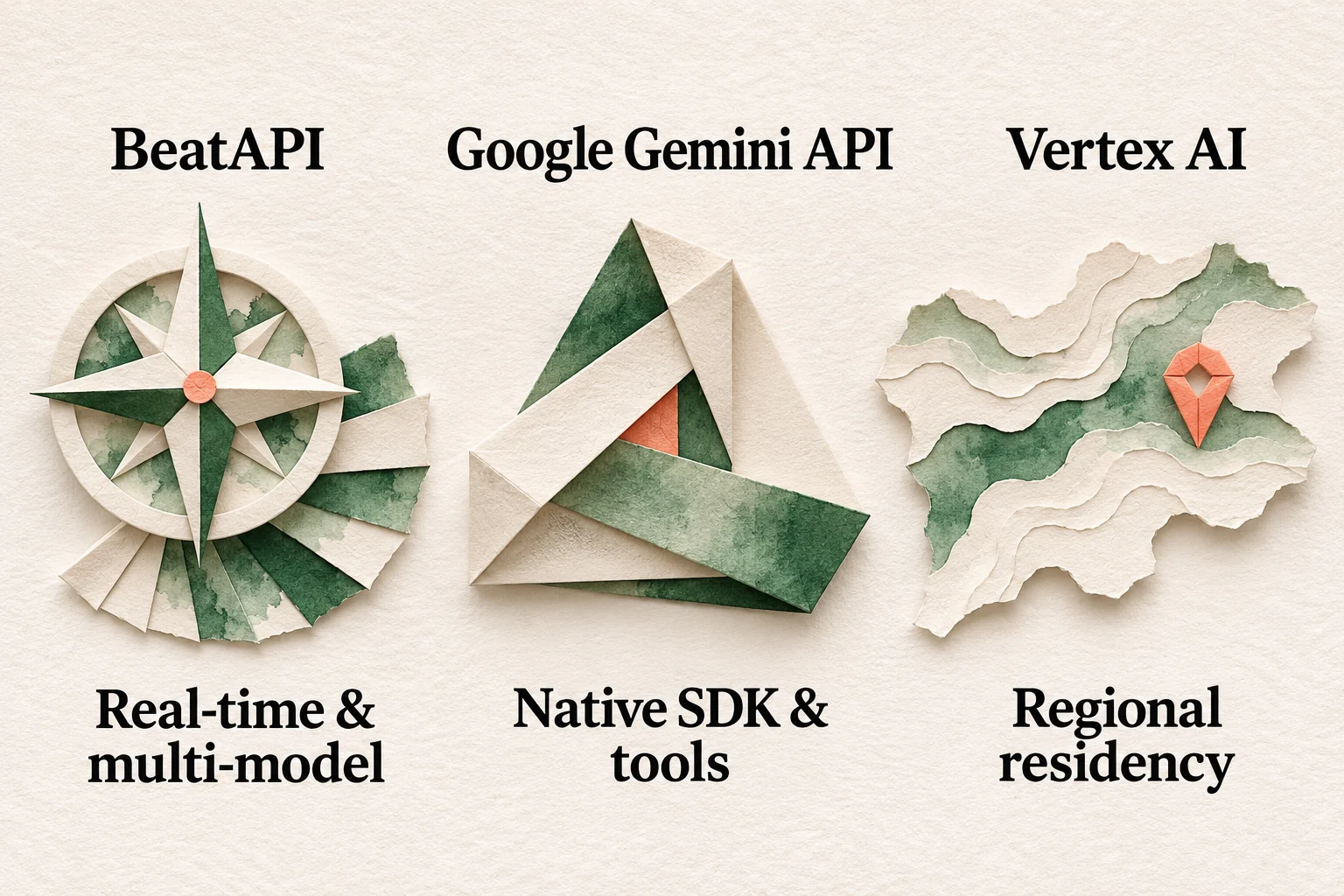
Route by your hardest constraint, not by list price alone: Pick BeatAPI for real-time agents, drop-in OpenAI/Anthropic SDK compatibility, and one-key access to multiple text, image, and video models. Pick Google Batch API or Gemini API Flex ($1.00 / $5.00 through November 30) only when asynchronous queues are acceptable, and pick Google Cloud Vertex AI regional endpoints (+10%) when US or EU data residency is mandatory.
Gemini 4 Argon real-time pricing across 8 providers
On paper, six of the eight providers below display the exact same "$2 input / $10 output" headline rate. Once you factor in credit-purchase fees, platform markups, and early full-price listings, real out-of-pocket costs span a 4x range. The table below compares live global-route pricing for gemini-4-argon (listed as google/gemini-4-argon on multi-model gateways) in USD per million tokens, excluding taxes and optional search-grounding fees.
Real-time public rates in USD per million tokens (global routing)
Already billed at full standard list price; catalog caps max input at 104,858 tokens
The eight platforms fall into four clear pricing tiers. BeatAPI sits alone at the bottom of the cost curve—50% under Google’s introductory rate with no top-up surcharge. Next come Google Gemini API, Vertex AI’s global endpoint, and Vercel AI Gateway’s default global route, all passing through Google’s base list rate cleanly. Cloudflare Unified Billing, Requesty, and OpenRouter form the third tier: their nominal token tables match Google, but a 5% platform fee or 5.5% credit purchase fee (5% for crypto on OpenRouter) makes real spend higher than calling Google directly.
WaveSpeedAI is the outlier to watch carefully. Its public model catalog already prices google/gemini-4-argon at $4.00 input, $0.20 cache read, and $20.00 output—double Google’s pre-December introductory tier and four times BeatAPI’s real-time price. Just as important, WaveSpeedAI’s catalog specifies Max Input: 104,858 tokens, roughly a tenth of Gemini 4 Argon’s native one-million-token window, which rules it out for single-pass repository or long-contract analysis.
Google’s December 1 price doubling, regional routes, and tiers
Google’s introductory discount on Gemini 4 Argon runs through November 30, 2026; starting December 1, 2026, every official service tier doubles. If you are weighing Google Gemini API against Google Cloud Vertex AI, the table below maps all active official tiers before and after the switch.
Google Gemini API and Vertex AI tiers in USD per million tokens (input / cache read / output)
Official tier
Through Nov 30, 2026
From Dec 1, 2026
Delivery & constraints
Google Gemini API Standard
$2.00 / $0.10 / $10.00
$4.00 / $0.20 / $20.00
Real-time synchronous response, global routing, paid tier only
Google Gemini API Batch
$1.00 / $0.05 / $5.00
$2.00 / $0.10 / $10.00
50% off Standard; asynchronous batch queue, up to 24-hour target turnaround
Google Gemini API Flex
$1.00 / $0.05 / $5.00
$2.00 / $0.10 / $10.00
50% off Standard; best-effort latency, slower than Standard
Google Gemini API Priority
$3.60 / $0.18 / $18.00
$7.20 / $0.36 / $36.00
~1.8x Standard for higher priority and steadier peak-hour latency
Vertex AI Global Standard
$2.00 / $0.10 / $10.00
$4.00 / $0.20 / $20.00
Consolidated GCP billing, global routing, supports Batch and Priority PayGo
Vertex AI Regional / Multi-regional (e.g., us, eu)
$2.20 / $0.11 / $11.00
$4.40 / $0.22 / $22.00
10% surcharge over Global for US, EU, or single-region data residency
Two practical differences separate Google’s two official surfaces. First, data residency is strictly a Vertex AI feature: routing to us, eu, europe-west2, or asia-southeast1 adds 10% to the global rate, whereas Google Gemini API and BeatAPI both use global routing only. Second, Google Cloud’s documentation notes that legacy Flex PayGo on Vertex AI does not support Gemini 4 Argon—GCP teams looking for the 50% offline discount need Vertex AI Batch API instead.
Among gateways, OpenRouter exposes an async batch alias (google/gemini-4-argon:batch) listed at $1.00 / $0.05 / $5.00 during the intro window (~$1.055 / $0.0528 / $5.275 after its 5.5% credit fee). BeatAPI does not offer a separate Batch or Priority tier; instead, it delivers real-time synchronous responses at the same $1.00 / $0.05 / $5.00 unit price. Because BeatAPI’s introductory window does not automatically expire on Google’s December 1 date, verify current rates on BeatAPI live pricing before locking in a multi-month December budget.
Why the same Gemini 4 Argon workload can cost 6x more
Three billing mechanics matter far more to your monthly Gemini 4 Argon invoice than small headline rate differences between aggregators:
Flat pricing across the full 1M unified context window: Input, thinking, and output share one 1,048,576-token window, with no sudden price cliff at 200K tokens (unlike Gemini 3.1 Pro) or 272K tokens (unlike GPT-6.2 Astra). Feeding 400,000 tokens of repository code into one request bills at the exact same per-million token rate as a 10,000-token prompt.
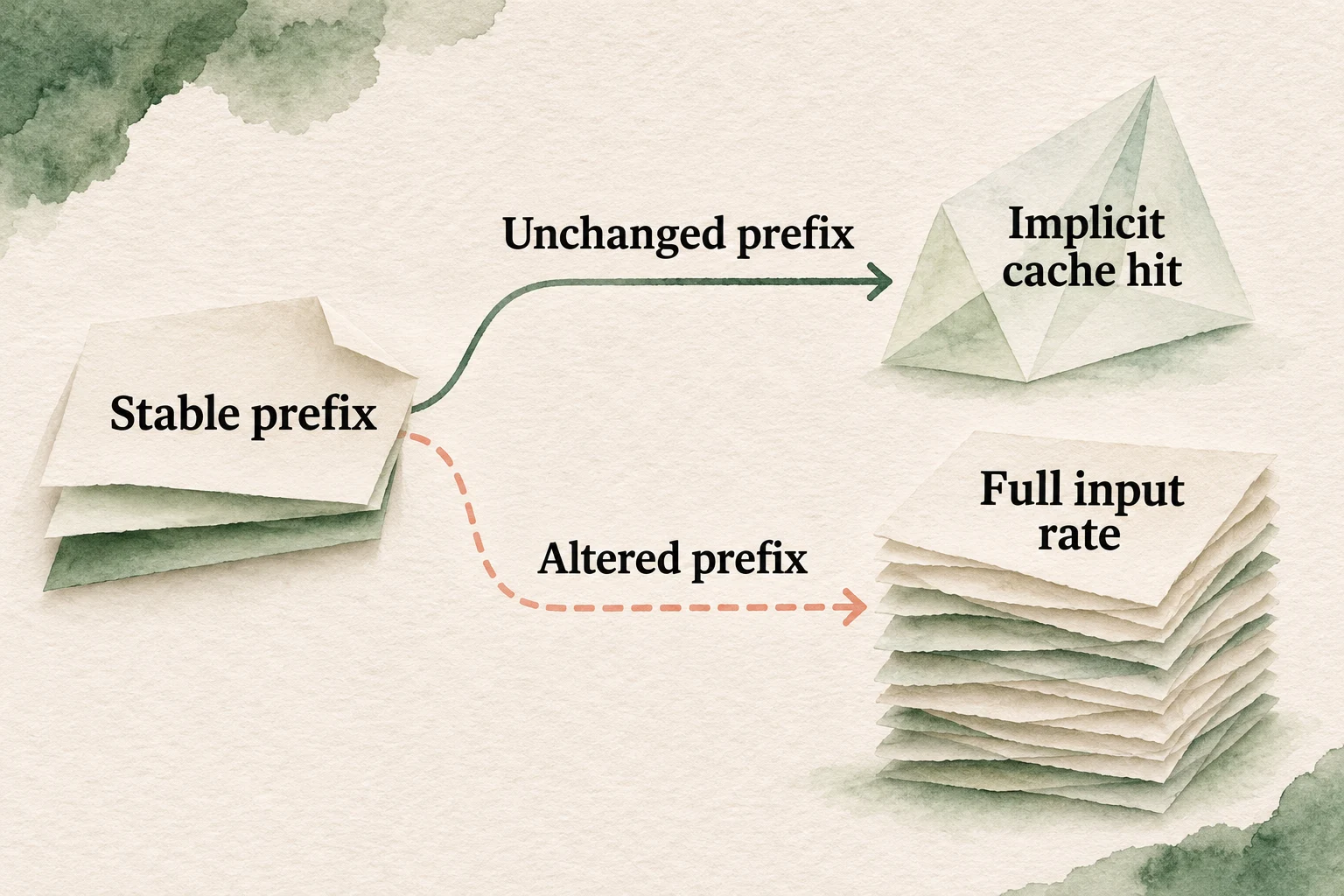
Implicit caching only—zero write fees, 95% discount when prefixes stay identical: Gemini 4 Argon drops legacy explicit caching (cachedContents), so there is no cache-write surcharge and no hourly storage bill. Whenever consecutive requests share an exact character-for-character prefix of at least 4,096 tokens, implicit caching kicks in automatically and discounts cached reads by 95%. Even though some aggregator catalogs (such as OpenRouter and WaveSpeedAI) still display a cache-write metadata field, Gemini 4 Argon natively relies on implicit caching; always check each response’s usage object to verify actual billing. Keep system instructions, tool schemas, and static documents at the top of the prompt, and put changing user questions and logs at the end.
Thinking tokens bill at the 5x output rate and cannot be disabled completely: Gemini 4 Argon tunes reasoning depth via thinking_level—low, medium (default), or high—and counts every internal reasoning token as billable output. A short 400-word reply can still carry 8,000 billable thinking tokens behind the scenes. Start routine multi-step jobs at medium, drop straightforward extraction to low, and cap max_output_tokens explicitly so runaway reasoning loops cannot drain a daily budget.
Keeping the shared prompt prefix identical preserves the 95% implicit cache discount; mutating the start of the prompt forces full input billing.
What three real workloads cost across all 8 providers
Per-million token rates only tell half the story. Below are apples-to-apples estimates for three representative Gemini 4 Argon workloads at current public rates (including Cloudflare Unified Billing’s and Requesty’s 5% fee and OpenRouter’s 5.5% credit fee). These are arithmetic estimates assuming identical token counts and cache hit rates across providers—not measured invoices.
Workload A (Multi-file coding agent refactor): One multi-turn refactoring job totaling 200K uncached input tokens, 1.2M implicit cache-read tokens, and 60K output tokens (including thinking).
Workload B (300K-token contract or filing Q&A across 16 turns): First turn loads 300K tokens and outputs 2.5K tokens, followed by 15 follow-up turns reusing the 300K cached prefix (1K new input and 2.5K output each)—totaling 315K uncached input, 4.5M cache reads, and 40K output tokens.
Workload C (1,000 standalone technical analyses): 8K uncached input and 2K output (including thinking) per request with no shared prefix—totaling 8M input and 2M output tokens.
Estimated real-time spend in USD (Google pre-December 1 introductory window)
Provider
Workload A: Coding refactor
Workload B: 300K doc, 16 turns
Workload C: 1,000 analyses
BeatAPI
$0.560
$0.740
$18.00
Google Gemini API (Standard)
$1.120
$1.480
$36.00
Google Cloud Vertex AI (Global)
$1.120
$1.480
$36.00
Vercel AI Gateway (Global)
$1.120
$1.480
$36.00
Cloudflare AI Gateway (Unified Billing, +5%)
$1.176
$1.554
$37.80
Requesty (+5% platform fee)
$1.176
$1.554
$37.80
OpenRouter (Standard, +5.5% credit fee)
$1.182
$1.561
$37.98
WaveSpeedAI (full standard listing)
$2.240
Catalog caps input at 104,858 tokens
$72.00
Scale Workload A to a production engineering team running 50 coding-agent jobs per day (1,500 per month): BeatAPI comes to $840/month at current rates. Google Gemini API, Vertex AI Global, and Vercel AI Gateway come to $1,680/month through November 30 and jump to $3,360/month once Google’s December 1 standard rates take effect. OpenRouter Standard (with its 5.5% credit fee) runs roughly $1,772/month now and $3,545/month after December 1, while WaveSpeedAI is already at $3,360/month today.
Workload B shows how sharply prefix discipline swings the bill. If you inject a changing timestamp or request ID at the top of the prompt and break implicit caching across all 16 turns, input balloons to 4.815M uncached tokens. That turns a $1.48 session into $10.03 at Google’s intro rate ($2.96 vs. $20.06 after December 1), and turns $0.74 into $5.015 on BeatAPI—a 6.78x increase (85.2% extra spend lost solely to cache misses).
Beyond the 50% discount: why teams route Gemini 4 Argon through BeatAPI
Saving a few cents rarely justifies adding another vendor to a production stack. Teams switch Gemini 4 Argon traffic to BeatAPI when three operational advantages line up at once:
Batch-level pricing without rewriting for async queues: BeatAPI’s $1.00 / $0.05 / $5.00 rates apply directly to live synchronous calls with zero top-up fees and a balance that never expires. Interactive coding agents, PR reviewers, and document analysts keep real-time UX without maintaining batch polling workers.
Drop-in compatibility with existing OpenAI and Anthropic SDKs: Calling Google directly means adopting the native Gemini SDK and maintaining a second streaming and tool-calling layer. On BeatAPI, gemini-4-argon works across OpenAI Chat Completions, OpenAI Responses, Anthropic Messages, and native Gemini generateContent—so most teams test and switch by changing a base URL, key, and model string.
One API key and balance across a full multi-model stack: Real production pipelines rarely rely on a single model. Teams routinely route lightweight edits and parallel tool loops to Gemini 4 Hydrogen or DeepSeek V4.1 Flash, hand long-context and cross-file work to Gemini 4 Argon, and escalate the hardest architectural or security audits to Gemini 4 Carbon, Claude Fable 5.2, or GPT-6.2 Astra—plus image and video models like GPT Image 2.6, Seedream 5.5, Seedance 2.5, and Kling 4.0 under one prepaid balance.
The trade-offs are just as clear: BeatAPI uses global routing only (no US or EU data residency), does not offer Google’s Priority tier, Batch API, or Search/Maps Grounding, and currently confirms text, image, and video inputs for Gemini 4 Argon. If your pipeline depends on direct audio or native PDF uploads, verify on a small sample first or route those specific calls through Google’s native API.
Five billing and integration gotchas beyond token rates
Check these five non-rate rules before committing traffic so surprises do not show up on your first invoice:
Operational and billing rules outside the token rate card
Check before launch
How providers handle it
Free tier & trial credits
Google does not offer a free API tier for Gemini 4 Argon. BeatAPI signup credits do not cover Gemini 4 Argon either—you need a funded balance. Consumer Gemini app subscriptions bill separately and never offset API spend.
Input modality coverage
Google Gemini API and Vertex AI natively accept text, images, video, audio, and PDFs. BeatAPI confirms text, image, and video inputs. Test audio and PDF behavior on any third-party gateway before rolling out.
Data residency & ZDR
Hard US or EU residency mandates require Google Cloud Vertex AI regional endpoints (+10%). Gateway-level zero data retention (ZDR) is configurable on Cloudflare AI Gateway and Vercel AI Gateway. BeatAPI is global routing only.
Grounding add-ons
Grounding with Google Search or Google Maps on Google Gemini API and Vertex AI incurs separate per-query charges outside the token rate card.
Billing & rate limits
Vertex AI rolls into GCP enterprise invoices with project-level quotas. BeatAPI deducts from a non-expiring prepaid balance with per-key RPM tiers that scale with cumulative top-ups. Vercel AI Gateway bills via Vercel, with optional regional routing (+5%) and telemetry priced separately.
Which provider fits your team and workload?
Start from your strictest operational constraint—data residency, native Google tooling, or real-time unit cost—and the right platform falls out immediately.
Match your route to your primary constraint: real-time cost and multi-model access, native Google SDK capabilities, or regional data residency.
Provider recommendation by scenario
Primary workload or constraint
Recommended provider
Why it fits
High-volume coding agents, live document Q&A, multi-model pipelines
BeatAPI
$1.00 / $0.05 / $5.00 real-time pricing (50% under Google intro) with zero platform fee, four compatible API protocols, and one-key access to text, image, and video models.
Native 1M long-decode continuations, audio/PDF inputs, or Search Grounding
Google Gemini API
Direct Google Gen AI SDK support for CONTINUATION hops, all five input modalities, Search/Maps Grounding, and Flex or Priority tiers.
Mandatory US or EU data residency, or consolidated GCP billing
Google Cloud Vertex AI
Regional and multi-regional endpoints (us, eu, +10%) integrated with GCP IAM, VPC controls, and enterprise invoicing.
Offline bulk summarization, tagging, or data cleanup (multi-hour tolerance)
Google Batch API or BeatAPI
Both cost $1.00 / $5.00 through November 30; keep existing Google batch pipelines on Batch API, or use BeatAPI to skip async queue maintenance.
Full-stack apps built on Vercel AI SDK seeking unified logs at zero markup
Vercel AI Gateway
Zero token markup on default global routing with one-line google/gemini-4-argon integration into Vercel observability.
Cross-upstream failover across dozens of model providers
OpenRouter, Requesty, or Cloudflare AI Gateway
Pay the 5%–5.5% fee (or route BYOK keys) when automated multi-upstream fallback is more valuable than lowest unit token cost.
How to verify Gemini 4 Argon on BeatAPI in ten minutes
Never migrate full production traffic off a rate table alone. Run these three checks against the Gemini 4 Argon API before cutting over:
Replay 3–5 accepted production tasks: Run previously verified coding refactors or document audits using model ID gemini-4-argon over your existing protocol (OpenAI Chat Completions, Responses, Anthropic Messages, or native Gemini generateContent) and confirm tool calls and output formatting pass cleanly.
Inspect the returned usage payload: Verify that your repeated system prompt and repository context actually hit the $0.05 cached-input tier, and check how much of your output bill goes to thinking tokens—dialing thinking_level to medium or low on simpler turns if needed.
Compare cost per accepted task, not cost per request: Add retries and failed runs into total spend, divide by tasks that pass your test suite, and compare that real unit cost against your current provider before shifting full volume.
How much should I budget per month to run 50 Gemini 4 Argon coding-agent tasks a day?
At 200K uncached input tokens, 1.2M implicit cache-read tokens, and 60K output tokens (including thinking) per task, 1,500 monthly tasks cost roughly $840/month on BeatAPI at current rates. The same workload costs $1,680/month on Google Gemini API, Vertex AI Global, or Vercel AI Gateway through November 30, rising to $3,360/month on December 1—and roughly $1,772/month now ($3,545/month after December 1) on OpenRouter Standard after its 5.5% credit fee. Run five real repository tasks first and plug your own usage logs into these rates before finalizing a monthly budget.
How do I keep costs under control when querying a 300K-token contract or codebase over 16 turns?
Gemini 4 Argon charges a flat rate across its entire 1,048,576-token window, so your main cost lever is keeping implicit caching alive for the 95% read discount. Put static instructions and the 300K-token material first, keep at least the first 4,096 tokens byte-identical across turns, and remove legacy cachedContents calls. With cache hits intact, a 16-turn Q&A costs roughly $0.74 on BeatAPI ($1.48 on Google intro; $2.96 from December 1); mutating the prompt prefix every turn pushes the exact same session to $5.015 on BeatAPI ($10.03 Google intro; $20.06 from December 1)—a 6.78x jump. Note also that WaveSpeedAI caps max input at 104,858 tokens and cannot accept a single 300K-token request.
For 10,000 offline document summaries that don’t need instant replies, should I use Google Batch API or BeatAPI?
Through November 30, 2026, both cost the exact same amount; on December 1, Google Batch API doubles. At 4,000 input tokens and 1,000 output tokens per document (40M input and 10M output total), both Google Batch API ($1.00 / $5.00, up to 24-hour async turnaround) and BeatAPI real-time calls ($1.00 / $5.00, immediate response) total $90. Starting December 1, Google Batch rises to $2.00 / $10.00, bringing the same 10,000-document run to $180. Stay on Google Batch if you already maintain batch job queues there; use BeatAPI if you want synchronous responses without polling infrastructure.
My team already uses the OpenAI or Anthropic SDK—do we have to rewrite for Google’s SDK to use Gemini 4 Argon?
No. Calling the Gemini 4 Argon API through BeatAPI with model ID gemini-4-argon supports OpenAI Chat Completions, OpenAI Responses, Anthropic Messages, and native Gemini generateContent out of the box—so you only swap the base URL, API key, and model ID. You only need Google’s native Gen AI SDK if your workflow specifically requires CONTINUATION hops for multi-hundred-thousand-token outputs, direct audio/PDF uploads, or Search/Maps Grounding.
How can I stop Gemini 4 Argon’s hidden thinking tokens from blowing up my agent’s output bill?
Set thinking_level per step and enforce a hard max_output_tokens ceiling in code. Because Gemini 4 Argon cannot turn reasoning off completely and bills every thinking token at the 5x output rate, leave standard tasks at medium, drop formatting or extraction steps to low, and reserve high for tough debugging. Capping max_output_tokens at 10,000 tokens bounds single-call output spend to $0.05 on BeatAPI ($0.10 Google intro; $0.20 from December 1), though setting the cap too tight can truncate answers mid-thought.
Our enterprise contract requires US or EU data residency—can we still use BeatAPI for Gemini 4 Argon?
No. Strict US or EU data-residency commitments require Google Cloud Vertex AI regional or multi-regional endpoints (such as us, eu, or europe-west2), which add a 10% premium over global rates ($2.20 input / $0.11 cache / $11.00 output through November 30; $4.40 / $0.22 / $22.00 from December 1). Both BeatAPI and the standard Google Gemini API route globally.
Is there a free API tier to test Gemini 4 Argon, and how should I plan budgets past December 1?
There is no free API tier for Gemini 4 Argon on either Google or BeatAPI—Google restricts it to paid accounts, BeatAPI signup credits exclude it, and consumer Gemini subscriptions do not cover API usage. Plan a small paid balance for testing. For post-December budgets, expect Google and pass-through gateways to double to $4.00 / $20.00 on December 1, while BeatAPI’s $1.00 / $5.00 introductory pricing does not share that fixed cutoff—check BeatAPI live pricing before scaling. If everyday coding loops are budget-constrained, offload routine turns to Gemini 4 Hydrogen ($1.50 / $7.50 on Google with no December 1 increase and a rate-limited free tier; $0.75 / $3.75 on BeatAPI), saving Gemini 4 Argon and Gemini 4 Carbon for deep multi-step work.