Compare Gemini 4 Neon API pricing across eight providers, including Google Batch and Priority tiers, Vertex AI regional routes, high vs xhigh effort costs, and BeatAPI rates.
Gemini 4 Neon is Google’s mid-tier Gemini 4 reasoning model, released on November 18, 2026 between Gemini 4 Hydrogen for routine execution and Gemini 4 Carbon for long-horizon research and architecture work. Teams use Gemini 4 Neon for recurring multi-step tasks such as cross-file debugging, multimodal document reconciliation, and tool-using coding agents. Under Google’s Gemini 4 Neon specification, the API model ID is gemini-4-neon. The model accepts text, images, audio, video, and PDF inputs, returns text, and uses a unified 1,048,576-token window shared across input, thinking, and output, with a 65,536-token default synchronous output cap and long-decode continuation up to 1,048,576 tokens. Google Gemini API offers no free tier for Gemini 4 Neon and charges $3.00 per million input tokens, $0.15 for implicit cache reads, and $15.00 for output (including thinking). On BeatAPI, funded accounts pay $0.90 per million input tokens, $0.09 for cached input reads, and $4.50 for output in real time.
Quick answer
BeatAPI has the lowest real-time rate across all eight Gemini 4 Neon providers: BeatAPI bills $0.90 per million uncached input tokens (70% below Google Standard), $0.09 for cached input reads (40% below Google Standard), and $4.50 for output including thinking (70% below Google Standard), with no platform or top-up fee. Google Gemini API, Google Cloud Vertex AI global endpoints, Vercel AI Gateway global routes, and ZenMux list $3.00 / $0.15 / $15.00. Cloudflare AI Gateway (Unified Billing) and Requesty add a 5% fee ($3.15 / $0.1575 / $15.75 effective). OpenRouter adds a 5.5% credit fee ($3.165 / $0.1583 / $15.825 effective).
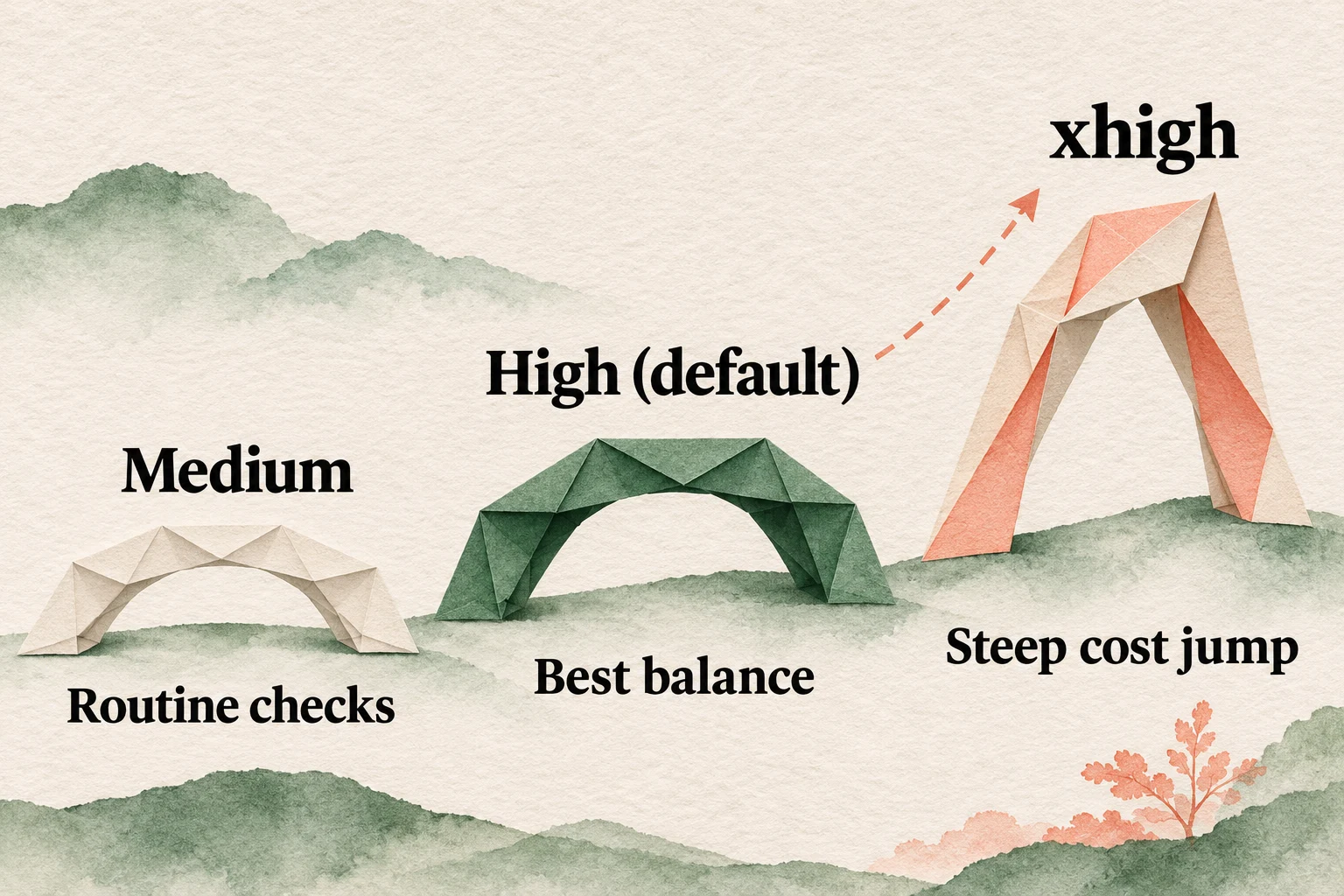
Global xhigh reasoning inflates Gemini 4 Neon bills more than provider choice: Gemini 4 Neon charges a flat per-token rate across its full 1M context window and has no December 1 price increase. All internal thinking tokens bill at the output rate (5x uncached input). On the Artificial Analysis Intelligence Index v5.0.1, switching Gemini 4 Neon from default high to xhigh adds 1 point (60 to 61) while raising official task cost by 72% ($3.74 to $6.44) and extending wait time from 15.3 to 26.9 minutes.
Prompt caching rules differ across gateways: Google Gemini API supports implicit caching only ($0.15/1M on shared prefixes of at least 4,096 tokens, with no write or storage fee). BeatAPI bills $0.09/1M for cached input reads with no write or storage fee. Google Cloud Vertex AI schedules a $3.75/1M cache-write fee starting January 12, 2027 ($4.125 regional). ZenMux lists input_cache_write: $3.75/1M in its live catalog, and OpenRouter flags supports_implicit_caching: false across all five Gemini 4 Neon endpoints.
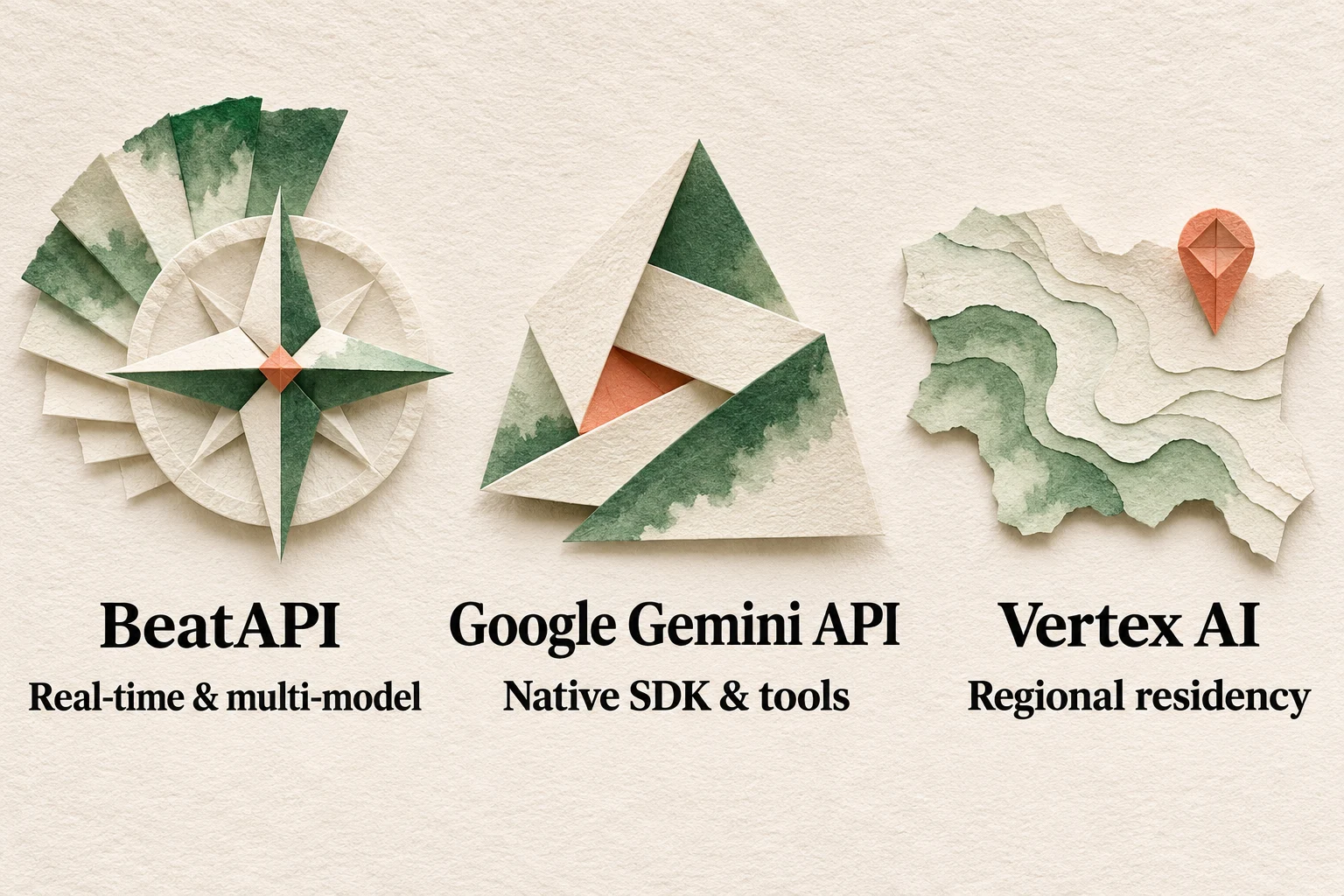
Match the Gemini 4 Neon provider to your hardest requirement: Use BeatAPI for real-time coding agents, OpenAI Chat Completions or Anthropic Messages compatibility, and one-key multi-model routing (funded account required; signup credit does not apply; /v1/responses returns 404). Use Google Gemini API for Search or Maps Grounding, native continuation, or Priority latency guarantees. Use Google Cloud Vertex AI regional endpoints (+10%) for US or EU data residency and GCP billing.
How much does Gemini 4 Neon cost across 8 API providers?
Across eight public providers checked on November 25, 2026, real-time Gemini 4 Neon pricing falls into three tiers. BeatAPI bills $0.90 input, $0.09 cached input, and $4.50 output per million tokens with no top-up fee. Google Gemini API, Google Cloud Vertex AI global endpoints, Vercel AI Gateway global routes, and ZenMux bill $3.00 / $0.15 / $15.00. Cloudflare AI Gateway (Unified Billing), Requesty, and OpenRouter list the same base rates, then add 5% to 5.5% in platform or credit fees. The table below compares global-route pricing for gemini-4-neon (listed as google/gemini-4-neon or vertex/gemini-4-neon on multi-model routers) in USD per million tokens, excluding taxes and grounding fees.
Real-time public rates in USD per million tokens (global routing, checked November 25, 2026)
5.5% credit fee ($0.80 min; 5% crypto); also lists flex and priority endpoints; catalog flags supports_implicit_caching: false
Model each token type separately when comparing BeatAPI with Google Gemini API. BeatAPI bills cached input reads at $0.09 per million tokens (10% of BeatAPI’s $0.90 input rate), while Google Gemini API bills cached input reads at $0.15 per million tokens (5% of Google’s $3.00 input rate). BeatAPI remains 40% cheaper per cached token and 70% cheaper on uncached input and output, so applying a single 70% discount across cached tokens would understate BeatAPI’s cache line item.
Verify actual usage fields on third-party gateways before budgeting for cache savings. OpenRouter charges a 5.5% credit purchase fee (5% for crypto), and its live google/gemini-4-neon endpoint metadata marks supports_implicit_caching: false across all five routes while listing an input_cache_write rate. ZenMux also lists a $3.75/1M input_cache_write rate in its live catalog, matching Vertex AI’s upcoming cache-write schedule.
How do Google Gemini API and Vertex AI service tiers compare?
Google Gemini API and Google Cloud Vertex AI both split Gemini 4 Neon across four service tiers: Standard, Batch, Flex, and Priority. Batch and Flex cut Google’s Standard rates by 50% ($1.50 input, $0.075 cache read, $7.50 output), while Priority raises them by 1.8x ($5.40 / $0.27 / $27.00). Vertex AI adds a 10% surcharge for regional endpoints such as us and eu, and offers 1-year (10% off) and 3-year (20% off) Enterprise Savings Plans against Global Standard.
Google Gemini API and Vertex AI tiers in USD per million tokens
Official tier
Input
Cache read
Output (incl. thinking)
Delivery & billing terms
Google Gemini API Standard
$3.00
$0.15
$15.00
Default real-time synchronous response, global routing, paid tier only, implicit caching only
Google Gemini API Batch
$1.50
$0.075
$7.50
50% off Standard; asynchronous batch queue with up to 24-hour target turnaround
Google Gemini API Flex
$1.50
$0.075
$7.50
50% off Standard; best-effort delivery with slower turnaround than real-time Standard
Google Gemini API Priority
$5.40
$0.27
$27.00
1.8x Standard; prioritized scheduling and lower tail latency under peak load
Vertex AI Global (Standard / Batch·Flex / Priority)
$3.00 / $1.50 / $5.40
$0.15 / $0.075 / $0.27
$15.00 / $7.50 / $27.00
GCP billing; cache write ($3.75 / $1.875 / $6.75) effective Jan 12, 2027; 32K+ outputs bill on timeout
Vertex AI Regional / Multi-region (us, eu, +10%)
$3.30 / $1.65 / $5.94
$0.165 / $0.0825 / $0.297
$16.50 / $8.25 / $29.70
Regional data residency; cache write ($4.125 / $2.0625 / $7.425) effective Jan 12, 2027
Vertex AI Enterprise Savings Plan (1-yr / 3-yr)
$2.70 / $2.40
$0.135 / $0.12
$13.50 / $12.00
10% or 20% discount against Global Standard for committed enterprise spend
Google’s asynchronous Batch and Flex tiers ($1.50 input, $0.075 cache read, $7.50 output, also exposed on OpenRouter through google-ai-studio/flex at $1.583 / $0.079 / $7.913 effective) still cost more than BeatAPI’s synchronous real-time rates ($0.90 / $0.09 / $4.50) on standard engineering and analysis jobs. Google Batch only undercuts BeatAPI in offline jobs where cached reads make up more than 95% of billed tokens and output stays near zero.
Vertex AI enforces two additional billing clauses for long-running Gemini 4 Neon jobs. Since November 13, 2026, completions exceeding 32K tokens on Vertex AI bill for retrievable tokens even when the request fails from a client or server timeout. Starting January 12, 2027, Vertex AI also activates cache-write billing at $3.75 per million tokens on Global Standard ($4.125 regional). Set explicit output bounds or use background continuation with clean timeout handling on long Vertex AI runs.
What drives Gemini 4 Neon API cost beyond token rates?
Three model-level rules control Gemini 4 Neon spend more than unit-price gaps between standard providers: the reasoning_effort setting, the shared 1,048,576-token window budget, and prefix stability for implicit caching.
Reasoning effort (high vs xhigh): Gemini 4 Neon accepts low, medium, high (default), and xhigh, and returns an error on minimal. Every internal thinking token bills at the output rate (5x uncached input). On the Artificial Analysis Intelligence Index v5.0.1, Gemini 4 Neon scores 60 at default high ($3.74 and 15.3 minutes per task at official rates). Raising effort to xhigh increases the score by 1 point (to 61) while raising official task cost by 72% ($6.44) and stretching wait time to 26.9 minutes. Keep high as the default for cross-file debugging, use medium for simple file reads or schema extraction, and enable xhigh only when high fails a concrete test.
Flat 1M shared window with a 65,536-token sync output cap: Gemini 4 Neon charges the same per-token rate at 400K tokens as at 10K tokens, with no 200K or 272K tier jump. Input, thinking, and final output share one 1,048,576-token pool, and synchronous calls stop at 65,536 output tokens (including thinking). Compact long agent histories before they squeeze out reasoning headroom.
Byte-identical prefixes for implicit caching: On Google Gemini API, shared prefixes of at least 4,096 tokens qualify automatically for $0.15/1M cache reads with no write or storage fee; on BeatAPI, cached reads bill at $0.09/1M with no write or storage fee. Place system instructions, tool declarations, repository maps, and static documents at the start of the message list, and append per-turn diffs, questions, and logs at the end. Changing a timestamp or request ID in the opening block invalidates the cache.
Keep Gemini 4 Neon on default high for complex recurring work; escalate to xhigh only when high fails a verified check.
What do three real Gemini 4 Neon workloads cost on each provider?
Across three illustrative Gemini 4 Neon workloads, BeatAPI reduces spend by 61% to 70% compared with Google Gemini API Standard and by 33% to 40% compared with Google’s asynchronous Batch and Flex tiers. The figures below are budget calculations from assumed token volumes and each platform’s November 25, 2026 public rates, not measured invoices. Cloudflare Unified Billing and Requesty include their 5% fee, OpenRouter includes its 5.5% credit fee, and all rows assume equal cache hit rates and output lengths:
Task A (Cross-file debugging and refactor coding agent at default high): 200K uncached input tokens, 1.2M cached input tokens, and 60K output tokens (including thinking).
Task B (300K-token spec or financial PDF and chart reconciliation across 16 turns): Turn 1 sends 300K uncached input and generates 2,500 output tokens; turns 2 through 16 each add 1,000 new input tokens, reuse the 300K cached prefix, and generate 2,500 output tokens, totaling 315K uncached input, 4.5M cached input reads, and 40K output tokens.
Task C (1,000 uncached code-review or structured-analysis calls): 8,000 input tokens and 2,000 output tokens (including thinking) per call with no shared prefix, totaling 8M input and 2M output tokens.
Estimated total spend in USD for three illustrative Gemini 4 Neon workloads
Provider / tier
Task A: Coding agent
Task B: 300K doc x 16 turns
Task C: 1,000 uncached calls
BeatAPI (real-time)
$0.558
$0.869
$16.20
Google Gemini API (Standard)
$1.680
$2.220
$54.00
Google Cloud Vertex AI (Global)
$1.680
$2.220
$54.00
Vercel AI Gateway (Global)
$1.680
$2.220
$54.00
ZenMux (Standard)
$1.680
$2.220
$54.00
Cloudflare AI Gateway (Unified Billing, +5%)
$1.764
$2.331
$56.70
Requesty (+5% platform fee)
$1.764
$2.331
$56.70
OpenRouter (Standard, +5.5% credit fee)
$1.772
$2.342
$56.97
Reference: Google Batch / Flex (50% off, async/non-real-time)
$0.840
$1.110 (interactive Q&A cannot use Batch)
$27.00
Reference: Vertex AI Regional (+10%)
$1.848
$2.442
$59.40
At 50 Task A coding-agent runs per day (1,500 runs per month), monthly Gemini 4 Neon spend equals $837 on BeatAPI, $2,520 on Google Gemini API, Vertex AI Global, Vercel Global, or ZenMux, $2,646 on Cloudflare Unified Billing or Requesty, $2,659 on OpenRouter Standard, $2,772 on Vertex AI Regional (+10%), and $4,536 on Google Priority (1.8x). Enabling xhigh globally and expanding Task A output plus thinking from 60K to 105K tokens raises a single run from $1.680 to $2.355 on Google Standard (+40%) and from $0.558 to $0.760 on BeatAPI.
In Task B, breaking the 300K-token prefix across 16 turns bills all 4.815M input tokens as uncached input. That raises Google Standard spend from $2.220 to $15.045 (6.78x) and BeatAPI spend from $0.869 to $4.514 (5.2x). Any router that fails to preserve implicit cache hits produces costs in that uncached range.
When should you route Gemini 4 Neon through BeatAPI, and what are its limits?
BeatAPI fits production teams that need synchronous real-time Gemini 4 Neon responses at below-Batch prices, drop-in OpenAI or Anthropic SDK compatibility, and one prepaid balance across multiple models. BeatAPI does not fit workloads that require free signup credits, OpenAI Responses (/v1/responses), US/EU regional data residency, or Google Search and Maps Grounding.
Synchronous real-time pricing below Google Batch and Flex: BeatAPI bills $0.90 input and $4.50 output in real time (40% below Google’s $1.50 / $7.50 Batch and Flex rates), with no 5% to 5.5% credit fee and no balance expiration. Interactive coding agents and review bots stay synchronous without async polling queues.
Three native API protocols on one model ID: BeatAPI serves gemini-4-neon over OpenAI Chat Completions (POST /v1/chat/completions; use https://direct.beatapi.io/v1 for long reasoning runs), Anthropic Messages (POST /v1/messages), and Gemini native (:generateContent). Existing OpenAI or Anthropic clients switch by changing the base URL, API key, and model ID.
Tiered multi-model routing under one BeatAPI key: Teams can send routine edits to Gemini 4 Hydrogen ($0.45 / $2.25 on BeatAPI), cross-file debugging and multimodal reconciliation to Gemini 4 Neon ($0.90 / $4.50), and the hardest architecture or security audits to Gemini 4 Carbon, Claude Opus 5.5, or GPT-6.2 Astra on the same account, alongside image and video APIs.
Four verified boundaries apply on BeatAPI: gemini-4-neon requires a funded account (signup credit does not apply); OpenAI Responses (POST /v1/responses) is unsupported and returns 404; BeatAPI provides global routing only, without US or EU regional residency; and BeatAPI does not include Google Search/Maps Grounding, Batch/Flex/Priority service tiers, or Google Cloud Agent Platform’s native Office and OpenDocument upload.
What non-token rules affect Gemini 4 Neon bills and integration?
Five non-token rules regularly change real deployment cost or break integrations after launch: paid-only access, input modality gaps on gateways, Vertex AI’s 32K+ timeout billing clause, per-query grounding fees, and regional data residency.
Five non-token rules to check before choosing a Gemini 4 Neon provider
Check item
Verified platform behavior
Free API access
Google Gemini API offers no free tier for Gemini 4 Neon. BeatAPI signup credit does not apply to Neon (funded balance required). Consumer Gemini Pro/Ultra and Antigravity subscriptions bill separately from API calls.
Input modality coverage
Google Gemini API, Vertex AI, BeatAPI, and OpenRouter accept text, image, audio, video, and PDF. Vercel AI Gateway’s public catalog lists text, image, pdf, and video without audio. Native Office/OpenDocument upload is confirmed only on Google Cloud Agent Platform.
Long-output timeout billing
Default synchronous output caps at 65,536 tokens (including thinking); longer outputs require background mode or continuation. On Vertex AI, completions exceeding 32K tokens bill for retrievable tokens even if the request fails from a client or server timeout (effective November 13, 2026).
Search & Maps Grounding
Available on Google first-party endpoints and supported gateways: Google provides 5,000 free monthly requests shared across Gemini 3+ models (1,500/day Search cap), then $14 per 1,000 requests. Internal tool instructions and function declarations also count as billed tokens.
Regional residency & ZDR
When contracts require US or EU processing, choose Vertex AI regional/multi-regional endpoints (+10%), Vercel AI Gateway us/eu routes (+10%), or Requesty’s managed @eu route, and confirm zero-data-retention controls in that platform’s console.
Which Gemini 4 Neon API provider fits your workload?
Choose BeatAPI when real-time cost and multi-model orchestration are your priority, Google Gemini API when you need native grounding or continuation, and Google Cloud Vertex AI when compliance requires US or EU regional endpoints.
Match the Gemini 4 Neon routing layer to your primary constraint: real-time cost and multi-model access, native Google tools, or regional residency.
Recommended Gemini 4 Neon provider by workload and constraint
Lowest real-time effective price ($0.90 / $0.09 / $4.50, no platform fee), drop-in Chat Completions / Messages / Gemini support, and one key across Hydrogen, Neon, Carbon, and other vendors.
Google Search/Maps Grounding, 1M long-decode continuation, or Priority latency guarantees
Google Gemini API
Direct Google Gen AI SDK support for grounding, continuation, and all four official tiers (Standard, Batch, Flex, Priority), including 5,000 free monthly grounding requests.
US/EU data residency, GCP IAM/VPC controls, or enterprise billing commitments
Google Cloud Vertex AI
Regional and multi-regional endpoints (+10%) plus 1-year (10% off) and 3-year (20% off) Enterprise Savings Plans under unified GCP invoicing.
Full-stack apps built on Vercel AI SDK needing zero-markup global routing and region toggles
Vercel AI Gateway
Zero token markup on global routing with built-in us/eu and Priority routing; verify whether your workload needs audio input before migrating.
Multi-upstream failover across dozens of providers (or BYOK routing)
OpenRouter / Requesty / Cloudflare AI Gateway
Built-in fallback routing and observability if a 5% to 5.5% fee (or BYOK passthrough) is acceptable; verify live cache-hit billing before scaling.
How to verify Gemini 4 Neon on BeatAPI in ten minutes
Replay 3 to 5 historical tasks on a supported endpoint: Generate an API key on a funded BeatAPI account and send gemini-4-neon requests to POST /v1/chat/completions (using https://direct.beatapi.io/v1 for long reasoning runs), POST /v1/messages, or Gemini native :generateContent. Do not send gemini-4-neon to /v1/responses, which returns 404.
Check usage and finish_reason in every response: Confirm repeated prefixes appear in cached_tokens at $0.09/1M, measure how much output goes to reasoning_tokens, and confirm max_tokens does not truncate the final answer. Start with reasoning_effort: "high" and test medium on lighter steps.
Compare cost per accepted deliverable: Add retries and rework to total spend, divide by tasks that pass tests or human review, and compare that unit cost against your current provider’s invoice before increasing traffic.
What is the exact model ID for Gemini 4 Neon across API providers?
Google’s official name across its launch announcement, DeepMind model card, Gemini API documentation, and Vertex AI pricing page is Gemini 4 Neon (without “.0”, and Neon rather than Neo, matching Hydrogen, Carbon, and Argon). Pass model ID gemini-4-neon on Google Gemini API, Vertex AI, and BeatAPI; google/gemini-4-neon on OpenRouter, Vercel AI Gateway, and ZenMux; and vertex/gemini-4-neon on Requesty.
What is the monthly budget for running 50 Gemini 4 Neon coding-agent tasks per day?
Assuming 200K uncached input tokens, 1.2M cached input tokens, and 60K output tokens (including thinking at default high) per run, 1,500 monthly runs cost $837 on BeatAPI, $2,520 on Google Gemini API, Vertex AI Global, Vercel AI Gateway Global, or ZenMux, $2,646 on Cloudflare Unified Billing or Requesty (+5%), $2,659 on OpenRouter Standard (+5.5%), and $2,772 on Vertex AI Regional (+10%). Replace those assumed counts with live usage logs from five real repository runs before locking a monthly budget.
How much more does xhigh reasoning cost than default high on Gemini 4 Neon?
On the Artificial Analysis Intelligence Index v5.0.1, stepping Gemini 4 Neon from default high to xhigh raises average official task cost by 72% ($3.74 to $6.44) and increases average latency from 15.3 to 26.9 minutes while lifting the composite score by 1 point (60 to 61). Because thinking tokens bill at the output rate (5x uncached input), keep high as your default, use medium for routine checks, and trigger xhigh only on hard failures where the extra spend is justified.
For 10,000 offline document summaries, should I pick Google Batch API or BeatAPI real-time?
BeatAPI real-time costs less and returns synchronously without queue management. For 10,000 documents at 4,000 input and 1,000 output tokens each (40M input, 10M output, no shared prefix), BeatAPI real-time totals $81, Google Batch or Flex (50% off, up to 24-hour async or best-effort delivery) totals $135, and Google Standard totals $270. Google Batch only undercuts BeatAPI in offline jobs where more than 95% of tokens are cached reads ($0.075/1M vs $0.09/1M) with minimal output.
Can I call Gemini 4 Neon on BeatAPI using an existing OpenAI or Anthropic SDK?
Yes. BeatAPI serves gemini-4-neon over OpenAI Chat Completions (POST /v1/chat/completions), Anthropic Messages (POST /v1/messages), and Gemini native (:generateContent), so existing OpenAI or Anthropic clients change only the base URL, API key, and model ID. Two constraints apply: do not send gemini-4-neon to OpenAI Responses (POST /v1/responses returns 404), and do not pass reasoning_effort: "minimal", which returns an error (the lowest valid setting is low).
Why do long-context bills on third-party routers sometimes exceed Google’s 95% implicit cache math?
Two causes account for most overruns. First, changing anything inside the leading 4,096+ tokens (such as timestamps, request IDs, or reordered tools) invalidates implicit caching: on a 300K-token document queried over 16 turns, losing the cache raises Google Standard from $2.22 to $15.05 and BeatAPI from $0.87 to $4.51. Second, gateway caching behavior varies: OpenRouter’s live Neon endpoints currently flag supports_implicit_caching: false, and ZenMux’s catalog lists a $3.75/1M cache-write rate. Run a two-turn test with an identical prefix and check cached_tokens in the response before scaling.
Is there a free API tier for Gemini 4 Neon, and which provider supports US or EU data residency?
No free API tier exists: Google Gemini API restricts Gemini 4 Neon to paid billing, BeatAPI requires a funded account (signup credit does not apply), and consumer Gemini subscriptions do not cover API usage. For mandatory US or EU data residency, use Google Cloud Vertex AI regional or multi-regional endpoints (+10%, $3.30 / $0.165 / $16.50), Vercel AI Gateway us/eu routes (+10%), or Requesty’s managed @eu route. BeatAPI and Google Gemini API developer endpoints route globally only.